
Refresh your style with a Crochet Openwork Sweater Pattern that feels light, shows playful gaps, and brings cozy flair to relaxed days and cool evenings.
This sweater is perfect for days when you want something light but warm enough to keep you comfortable. The open stitch design lets air flow through, so you don’t feel too hot or too cold. It has a soft touch that feels gentle on your skin, and the pretty holes in the pattern give it a stylish, airy look.
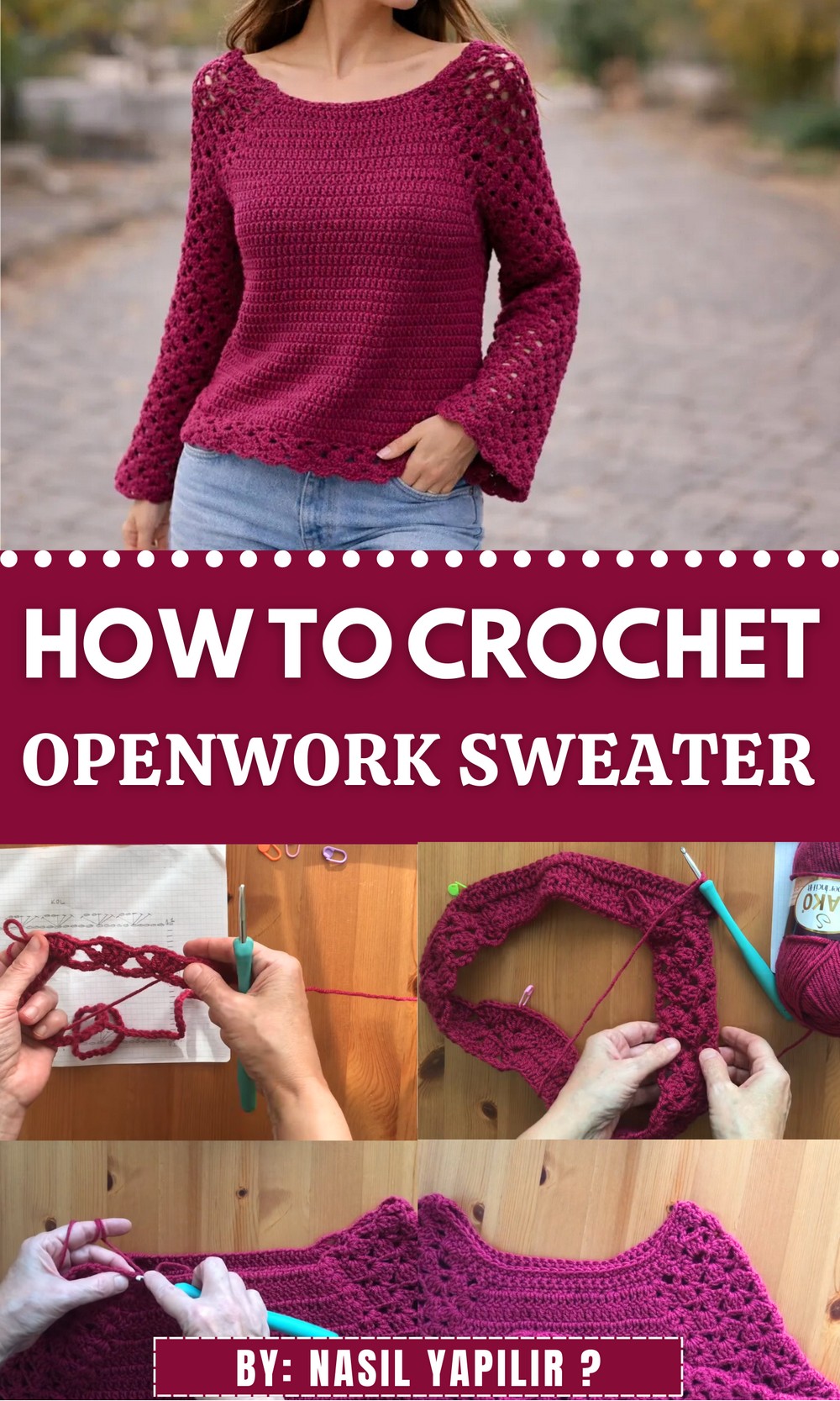
Easy Crochet Openwork Sweater Pattern That Looks Neat
You can easily wear it over a shirt or dress to make your outfit look special and handmade. Its loose fit lets you move freely and feel relaxed all day long.
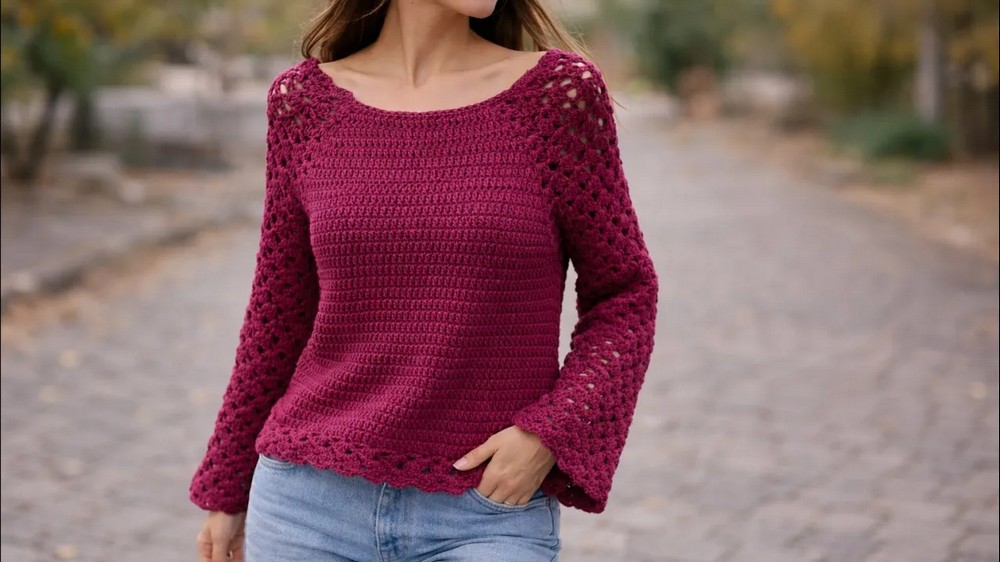
Whether you’re going out with friends, running errands, or just resting at home, this sweater adds a simple, beautiful touch to your style. It’s a cozy, fun piece that’s both practical and charming, ready to become one of your favorite clothes to wear again and again.
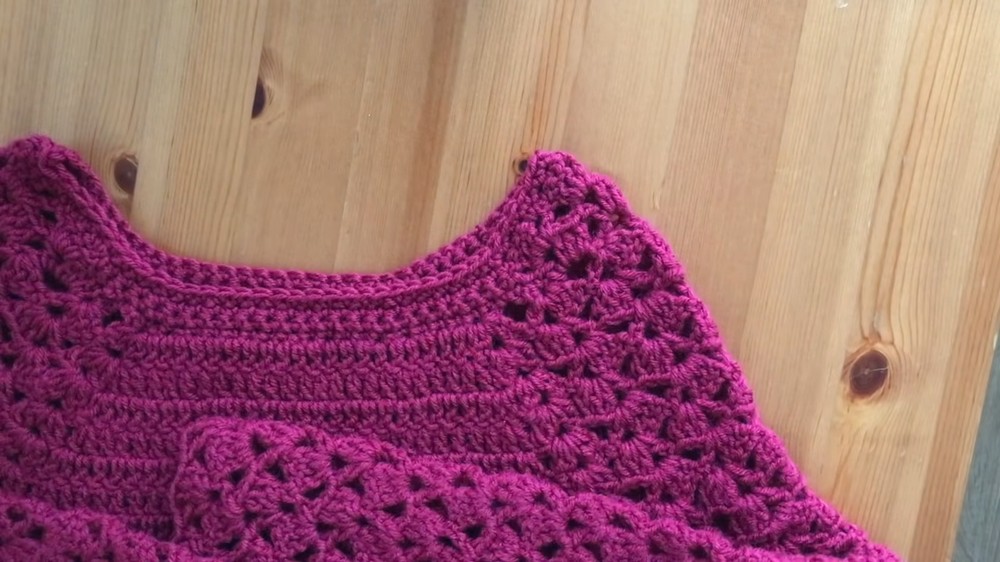
Crochet Top-Down Sweater with Openwork Sleeves
Difficulty Level:
Intermediate – Requires understanding of double crochet, chain space motifs, pattern repeats, and shaping through strategic increases.
Materials:
- Nako’s Super Pearl yarn (approximately 180 grams)
- Crochet hook size 5
- Stitch markers (to mark corners and increases)
- Measuring tape or mannequin
Special Features:
- Top-down construction allows easy try-on and fitting
- Repeating butterfly/leaf motif adds elegant openwork
- Openwork sleeves allow airiness and style
- Adjustable width via multiples of 5 chains and motif repeats
- Perfect for layering or standalone wear
Step-by-Step Pattern
Step 1: Yarn and Hook Information
- Use Nako Super Pearl yarn or similar medium thickness yarn.
- Crochet hook size 5 mm for good stitch definition and drape.
- Approximately 180 grams of yarn used for this project.
- Chain length and motif counts can be adjusted to size.
Step 2: Measurements & Planning
- Underarm-to-underarm width: ~45 cm (adjust per preference).
- Body length: ~58 cm (variable).
- Determine arm sleeve size by counting motifs (~5 motifs per arm in this tutorial).
- Total motifs planned: 5 motifs on each arm, 20 motifs front, 20 motifs back.
Step 3: The Motif Foundation Chain
- Begin with a foundation chain in multiples of 5 (e.g., 102 chains based on size).
- Ensure foundation chain is long enough for neckline circumference.
- Check chain length on mannequin or around your neck.
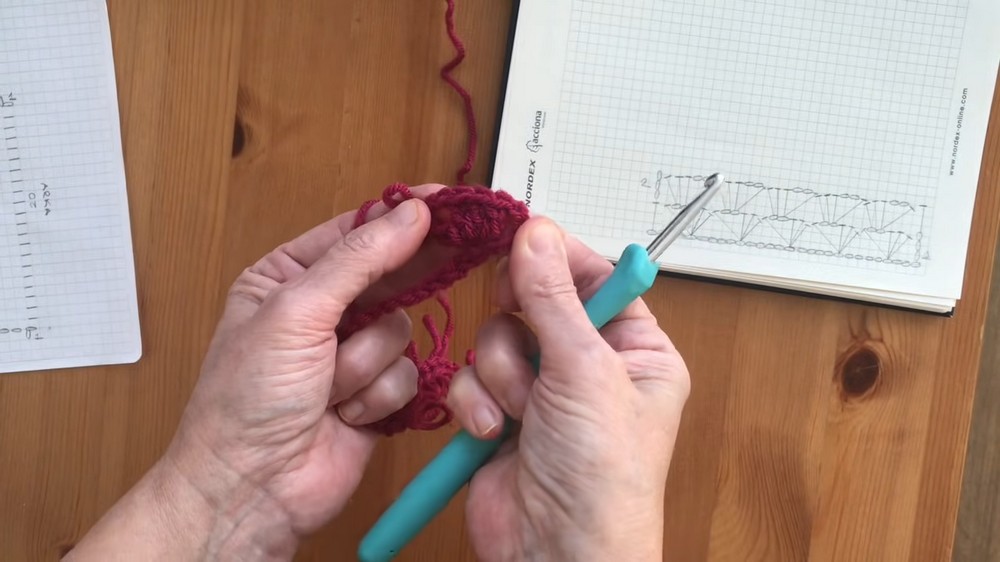
Step 4: First Crochet Row (Motif Base)
- Skip first 4 chains.
- In 5th chain from hook, work:
3 double crochet (dc) stitches, 2 chain stitches (ch), 1 dc all into the same chain. - Skip next 4 chains.
- Repeat the sequence (3 dc, 2 ch, 1 dc) in every 5th chain along foundation.
- This creates “leaf” or “butterfly” bases with spacing.
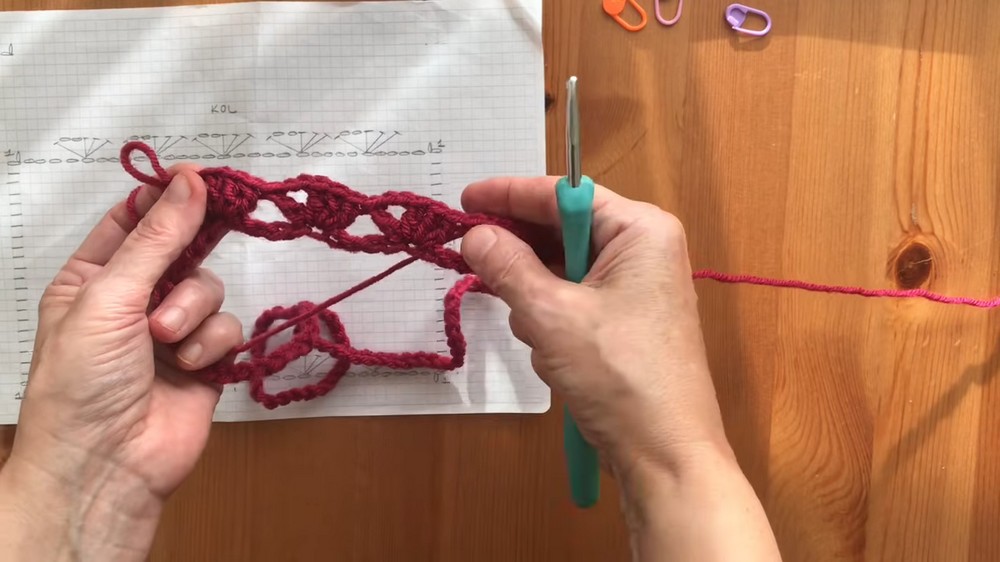
Step 5: Second Crochet Row (Motif Development)
- Chain 3 (counts as first dc).
- Turn work.
- Work into the gaps created in the previous row by:
- 3 dc, 2 ch, 1 dc in each 2-chain space.
- Maintain the solid sections by double crochet stitches worked on top of previous triple dc.
- The motif should start forming on alternating sides.
Step 6: Continue motif rows repeating step 5
- On each row, turn your work and repeat the motif pattern on chain spaces:
- 3 dc, 2 ch, 1 dc into each open 2-ch gap.
- This creates a delicate openwork pattern with “butterfly” motifs alternating sides every row.
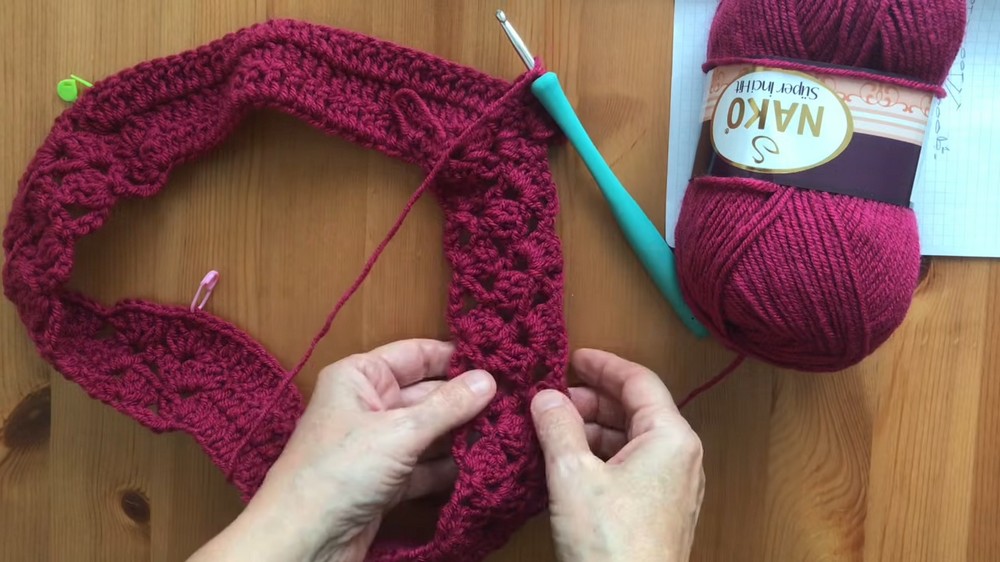
Step 7: Forming the Sleeves and Body Separation
- Decide on the number of motifs per sleeve (example: 5 motifs per arm).
- Calculate total motif number on body front and back (example: 20 front +20 back).
- On the armholes, increase stitches gradually by making additional double crochet stitches at strategic points at the base of motifs and corners.
- At the separation point (~20 cm from base), create chains to separate sleeve and body.
Step 8: Increasing on Motifs (Shaping)
- Increase motif count at corners and base of leaves by working 2 dc stitches into the same stitch at key spots.
- Work additional motifs aligned along rows, keeping count consistent.
- Increase on body and sleeves until desired width is achieved.
- Use stitch markers to keep track of where increases happen.
Step 9: Continuing with Double Crochet for Body
- Between motifs and sleeves, add rows of double crochet stitches to fill and shape.
- Maintain stitch count in multiples of 5 to work in harmony with motif repeats.
- Keep checking fit on mannequin or yourself.
Step 10: Joining and Shaping Corners
- Join sections flat when needed using slip stitch or single crochet to keep edges aligned.
- Keep consistent corner motifs, adding chain spaces or double crochet for shaping.
- Avoid gaps or holes during joins by tightening stitches appropriately.
Step 11: Sleeve Construction
- Continue motifs on sleeves with same pattern.
- Increase or decrease motifs or rows in sleeve depending on desired length and width.
- Finish sleeve edge with single crochet or decorative edge.
Step 12: Neckline and Edging
- Finish neckline with 2 rows of single crochet stitches for a neat edge.
- Optionally add additional rows for a tighter neckline or an open look.
- The neckline can be shaped with chain stitches or left straight.
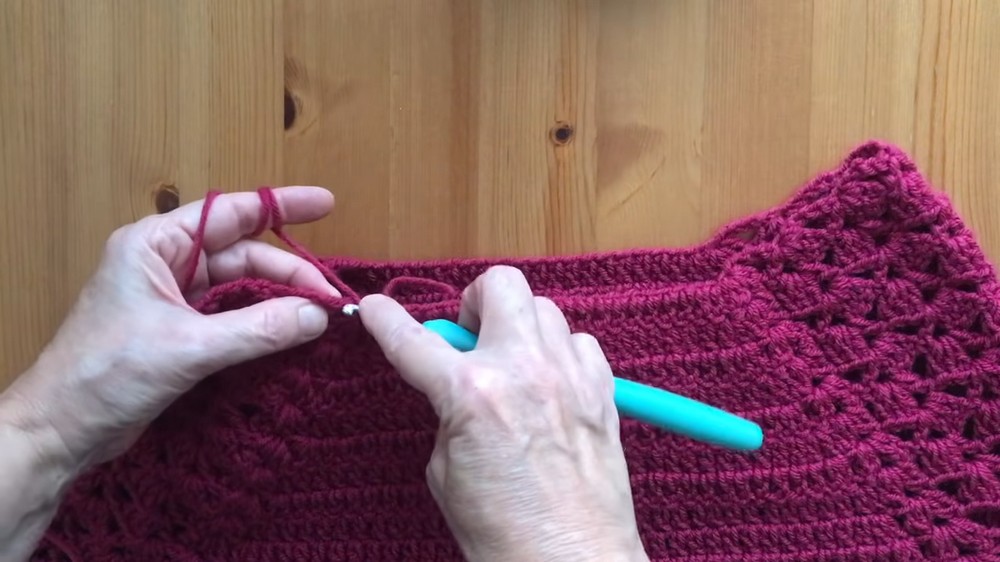
Step 13: Finishing and Assembly
- Weave in all ends carefully.
- Block the garment to shape (wet or steam block as appropriate).
- Try on garment and adjust tie or length if needed.
- Optionally add an elastic band or ribbing at hem for a firmer fit.
Tutor’s Suggestions:
- Always try on the piece as you go, especially to check arm and body fit.
- Use graph paper or motif charts to plan increases and motif placements.
- Alternate the side the motif leaves fall to avoid fabric twisting.
- Add or reduce motifs for larger and smaller sizes.
- Consider using stitch markers for increases and corners.
- Keep yarn tension consistent to maintain an even fabric.
Uses:
- Ideal as a spring/summer lightweight sweater.
- Suitable for casual or semi-formal wear.
- Great layering piece with openwork sleeves allowing cooling breathability.
- Customizable by yarn color and length.
Tip:
When working on the openwork motifs, count stitches carefully and do sample swatches to ensure the desired gauge for fit and consistency. Use stitch markers on turns and corners to prevent losing track of increases.
Conclusion:
This top-down crochet sweater pattern combines timeless openwork motifs with practical shaping for a gorgeous and comfortable garment. By following motif repeats and carefully increasing, you’ll create a beautifully balanced and wearable piece with plenty of texture and charm.