

This sweater works beautifully as a cozy layering piece for crisp weather. The bobble stitch adds depth and richness to the fabric’s surface, creating a garment that looks more luxurious than a simple flat-knit sweater. The result is both functional — offering warmth and softness — and visually striking, with a chunky texture that catches the eye.
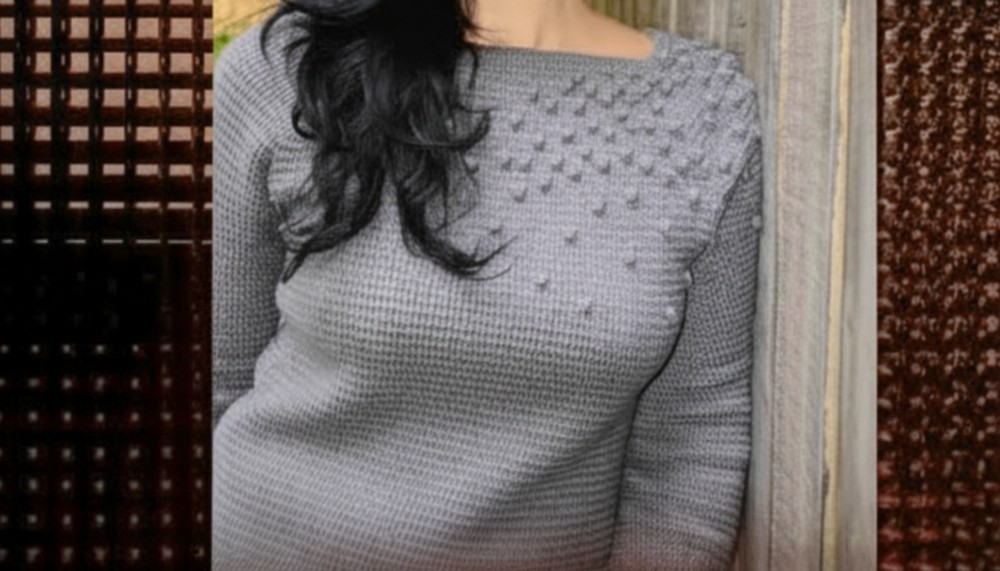
Whether picked in neutral tones for timeless elegance or brighter hues for a bold statement, the finished sweater brings comfort, style, and a touch of handmade appeal to any outfit.
You begin with a basic foundation — working a large rectangle using repeated bobble (or cluster) stitch rows to build the body of the sweater.
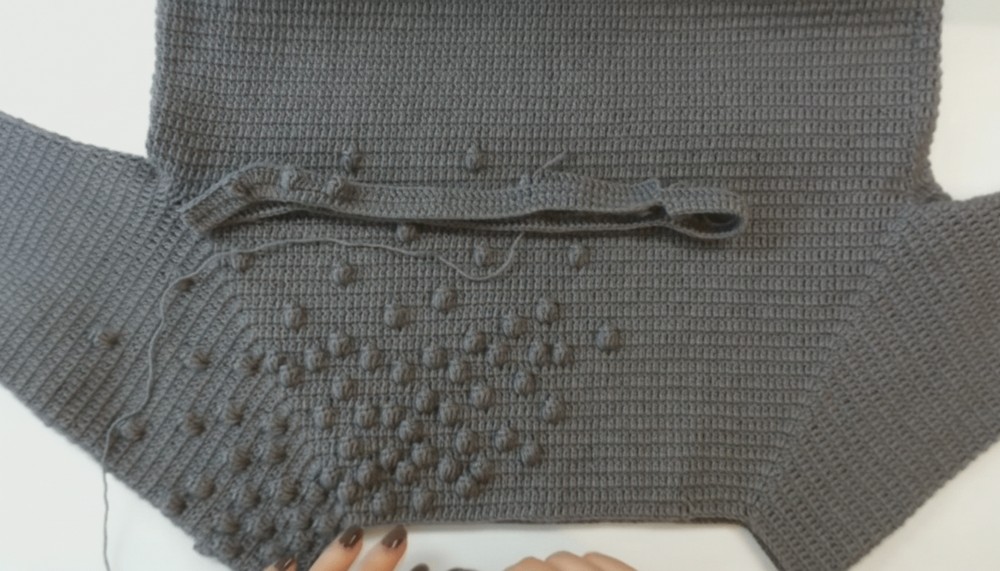
In the mid‑section, you continue alternating bobble rows with regular stitch rows (such as double crochet or half‑double crochet) to create alternating pockets of texture and smoothness — this helps shape the sweater body while retaining flexibility and softness.

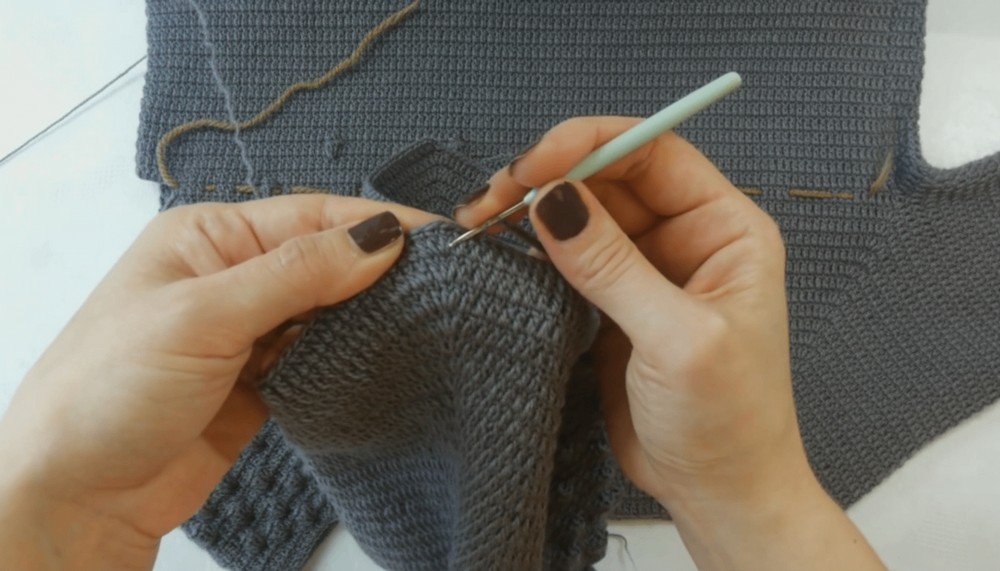
Toward the end, you seam or join the rectangle into sleeves or body panels (depending on style), finish edges neatly, and add cuffs or collar if required, giving the piece a clean, finished structure.
Some Importent Points:
Materials and Uses
The primary purpose of this project is to create a comfortable, textured crocheted sweater that includes decorative bobble stitches, called shishechka (little cones). The materials include yarn suitable for a sweater and a crochet hook. The video does not specify the hook size, so you select one appropriate for your yarn weight.
Level of Difficulty
While the project utilizes basic stitches (chain, double crochet, slip stitch), the length of the project (22 rows for the yoke and many more for the body/sleeves), the intricate bobble technique, and the constant need to track raglan increases and stitch counts suggest an Intermediate level of difficulty.
Special Features
-
Top-Down Construction: You crochet the sweater starting from the neckline, working the yoke in a round until you separate the sleeves.
-
Popcorn/Bobble Stitch (Shishechka): You create the texture by placing these stitches (six double crochets worked into one stitch and then joined) haphazardly throughout the yoke and body for a scattered, randomized design.
-
Raglan Yoke: You use specific increases (three double crochets in one central stitch) in four defined spots to create the shaping for the shoulders.
Tutor’s Suggestions
-
Tension/Gauge: Do not crochet too loosely, but also not too tightly; maintain a moderate, even tension. When crocheting double crochets, you should insert the hook into the actual body of the stitch, not just the two loops at the top. This keeps the garment from stretching out and helps it hold its shape after washing and wear.
-
Maintaining Raglan Lines: To ensure the raglan lines stay straight and do not shift, you must make a slip stitch to the central stitch of the raglan line at the start of every new round, followed by a chain three and two double crochets in that same central stitch.
-
Bobble Placement: You can arrange the decorative bobble stitches anywhere you like, applying your own creativity, as the pattern is beautiful regardless of their chaotic arrangement.
-
Seaming Sleeves: To make the underarm look neater, you should use the yarn tail to reinforce and tighten the stretched stitches that form where you joined the yoke.
Conclusion
You successfully complete your crocheted top-down sweater with raglan shaping, a random bobble pattern, and reinforced edges. You wash the finished sweater at 30 degrees Celsius and lay it flat on a horizontal surface to dry.
Final Tip
When attaching the yarn to start the sleeves, you will notice that the first row of double crochets under the armpit appears stretched out. You should use the starting yarn tail to sew and subtly tighten these stretched stitches on the first row to give the underarm a neater, more reinforced look.